



Table of contents
- Plan bird protection sensibly
- Bird protection for the garden, balcony and terrace
- Protection for roofs, facades and gutters
- Acoustic and specialized solutions
- Choose the right bird deterrent
- FAQ on bird control
Plan bird protection sensibly
Effective bird control always begins with a thorough analysis of the situation. Not every bird species behaves the same, not every surface is equally sensitive and not every method is suitable for every location. Very different requirements arise on balconies, terraces, roofs, in gardens or on agricultural areas. While in some areas the main aim is to avoid contamination through feces, in other areas the focus is on protecting fruit, seeds, facades or gutters. That's exactly why it's worth relying on suitable solutions that can be used both effectively and permanently. Modern bird deterrent systems range from classic optical deterrents to mechanical and acoustic measures. It is particularly important that the chosen variant fits the location, the bird species and the desired protection area. If you act early, you can avoid major damage and significantly reduce the amount of cleaning or repair work. In addition, correct placement plays an important role, because even a good product only looks convincing if it is installed correctly and checked regularly. It also makes sense to combine different methods in order to avoid a lasting habituation effect on the animals. In this way, the protective effect can often be significantly increased. On a specialized site like Vogelschrei24, those interested can find various solutions for homeowners, gardeners and business owners who are looking for practical and practical bird deterrents. What is crucial is not only the selection of the product, but also the understanding of where which defense makes sense. Anyone who observes this principle creates the basis for effective, animal-friendly and long-term bird protection around the house, yard, garden and building.
Bird protection for the garden, balcony and terrace
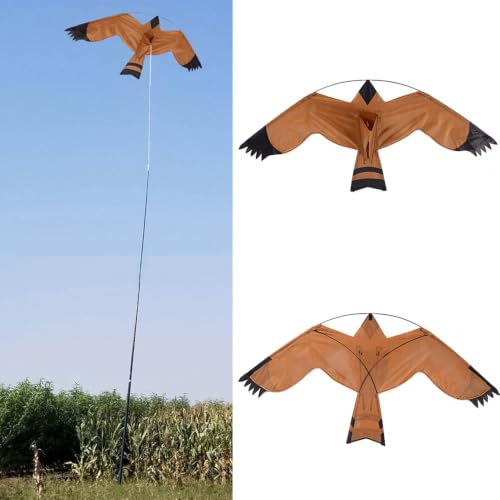
Many people want a quiet and clean environment in the garden, on the balcony or on the terrace, but that's exactly where birds often like to stay. Food sources, watering holes, sheltered corners and elevated seating make private outdoor areas attractive. This can quickly become problematic if plants are pecked at, berries and fruit are eaten, or seating and railings are regularly soiled. For such areas, flexible and clearly visible measures are required that can be integrated without much effort. Classic visual deterrents, moving elements or dummies can provide the first effective impulses to keep birds away. Particularly in gardens with fruit trees or beds, a targeted combination of mobile defense solutions and visible signals can help to reduce feeding damage. If you would like general information about what options are available, you can find information on the page Keeping birds away a good overview of different approaches. A traditional and still popular outdoor solution is the Scarecrows, which can be used as a visible deterrent, especially in open areas or kitchen gardens. It is important that such methods are regularly repositioned or supplemented with other measures, as birds can get used to static stimuli. On balconies and terraces, it is also important to have an inconspicuous, space-saving solution that does not disrupt the use of the area. Here it is worth choosing products that are easy to attach and at the same time offer long-lasting protection. The environment should also be taken into account: open sources of food, leftover food lying around or permanently accessible nesting areas also attract birds. Anyone who keeps their areas clean and at the same time uses appropriate defensive measures creates significantly better conditions for lasting success. In this way, private outdoor areas can be protected without having to forego usability, appearance or comfort.
Protection for roofs, facades and gutters
Birds often cause particularly stubborn problems on facades, roof edges, ledges and gutters. Many animals use elevated parts of buildings as landing spots, resting areas or potential nesting areas. The consequences range from dirt and clogged gutters to damage and increased cleaning effort. The risk of expensive consequential damage increases, especially where nesting material accumulates or rainwater can no longer flow freely. It therefore makes sense to protect endangered areas at an early stage with mechanical protection systems. Proven solutions include spikes, which make it much more difficult to sit down on narrow areas. If you want to specifically secure problematic seats on window sills, wall projections or roof edges, you will find on the subpage Pigeon spikes appropriate information about a particularly well-known form of bird control. It is equally important to protect water drains and roof areas, as nests and deposits can impede drainage there. The site offers Bird protection for gutters a thematically appropriate overview. Anyone who has to deal with swallows on buildings must also bear in mind that special legal and practical requirements apply because nests cannot simply be removed. This makes it all the more important to take early and appropriate precautions in the relevant areas. For this purpose, the site provides Swallow deterrents helpful clues. In principle, defenses should always be installed in such a way that problem areas are consistently secured without unnecessarily affecting the structure of the building. Proper planning prevents gaps through which animals can gain access again. It is particularly advisable to combine protective systems with one another on longer roof surfaces or several risk points. This creates a robust solution that not only works in the short term, but also helps in the long term to keep the facade, roof drainage and sensitive building areas clean and functional.
Acoustic and specialized solutions
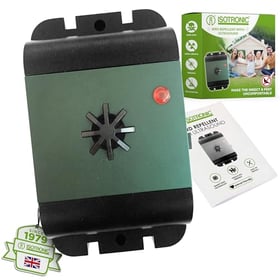
Not every bird deterrent has to work purely visually or mechanically. In many areas of application, acoustic or specialized systems offer a useful addition, especially when larger areas need to be protected or certain bird species need to be specifically deterred. Acoustic solutions can use signals to keep birds at a distance and are particularly suitable where classic measures can only be installed to a limited extent or where the protection area needs to be flexible. The subpage provides an introduction to this topic Acoustic bird deterrents, where corresponding approaches are presented. There are also defense systems that are tailored to individual bird species or typical problem situations. Smaller birds in particular often appear in groups and can cause significant contamination or damage in a short period of time. For such cases, a specially designed Sparrow deterrents be interesting when it comes to keeping frequent visitors at a distance. Special solutions against starlings also play a role in agricultural areas, with fruit trees or in regions with strong seasonal bird pressure. If you would like to find out more about this topic, you can visit the Starling deterrents include. Even larger birds or particularly assertive species often require adapted measures that are not only visible, but also have sufficient reach or signaling effect. What is important with all specialized systems is that they fit the actual problem and are not used across the board. Anyone who observes the number of birds, the preferred landing places and the times of day of activity can make much more targeted choices. It is also advisable to combine specialized methods with classic protective measures so that the animals develop a habituation effect less quickly. This creates a coordinated protection concept that is tailored to the respective bird species and the location and therefore works much better than a single, inappropriately chosen standard solution.
Choose the right bird deterrent
Selecting the right bird deterrent always depends on the goal to be achieved and the local conditions. If you only want to keep occasional visitors away, you usually need a different solution than someone who regularly has to deal with pigeons, sparrows, starlings or other birds on the roof, balcony or garden area. That's why it's worth asking a few basic questions before buying: What type of bird is causing the problem? Where do the animals prefer to sit or nest? Is it primarily about protection against droppings, crop losses, damaged building parts or permanently blocked gutters? The more precisely these points are answered, the more targeted a suitable measure can be selected. The website is ideal as a general introduction to the topic. Bird deterrents, which comprehensively depicts the topic of bird control. For special requirements with larger or conspicuous birds, the underside Keeping ravens away be relevant. Basically, mechanical solutions are often strong where fixed seating surfaces need to be protected, while optical or acoustic methods are more suitable for open areas, changing positions or additional stimuli. Bird control is often particularly successful when several measures are combined sensibly. Ease of installation should also play a role, because only correctly attached and regularly checked products ensure the desired effect over the long term. Equally important is resistance to wind, weather and UV influences, especially outdoors. If you pay attention to quality, suitability and the right place of use, you will save time, cleaning costs and unnecessary repairs in the long term. A good bird deterrent is therefore not just any product, but a solution tailored to the situation that prevents, protects and makes the affected area more usable in the long term. This is exactly the difference between short-term improvisation and a well-thought-out, effective defense strategy.
FAQ on bird control
Which bird repellent is best suited for the balcony?
Space-saving and inconspicuous solutions such as spikes, optical deterrents or combined systems are particularly suitable for the balcony. What matters is where the birds are sitting and how often the problem occurs.
Are pigeon spikes an animal-friendly solution?
Pigeon spikes are used to prevent landing on certain surfaces. They are intended to keep birds away, not injure them, and are therefore often used as a proven mechanical protective measure.
What helps against birds in the Gutter?
Special protection systems are useful for gutters prevent birds from nesting or bringing in material. This means that the water drains freely and consequential damage caused by blockages is reduced.
Can swallows be legally driven away?
Special care is required with swallows as they are protected. Existing nests must not simply be removed. Therefore, timely prevention in vulnerable facade areas is particularly useful.
When is acoustic bird deterrent worth it?
Acoustic bird control can be useful if larger areas are to be protected or if optical and mechanical measures alone are not sufficient. It is often used in addition to increase the effect.